

Camber Sands with dogs: beach rules, walks and local tips
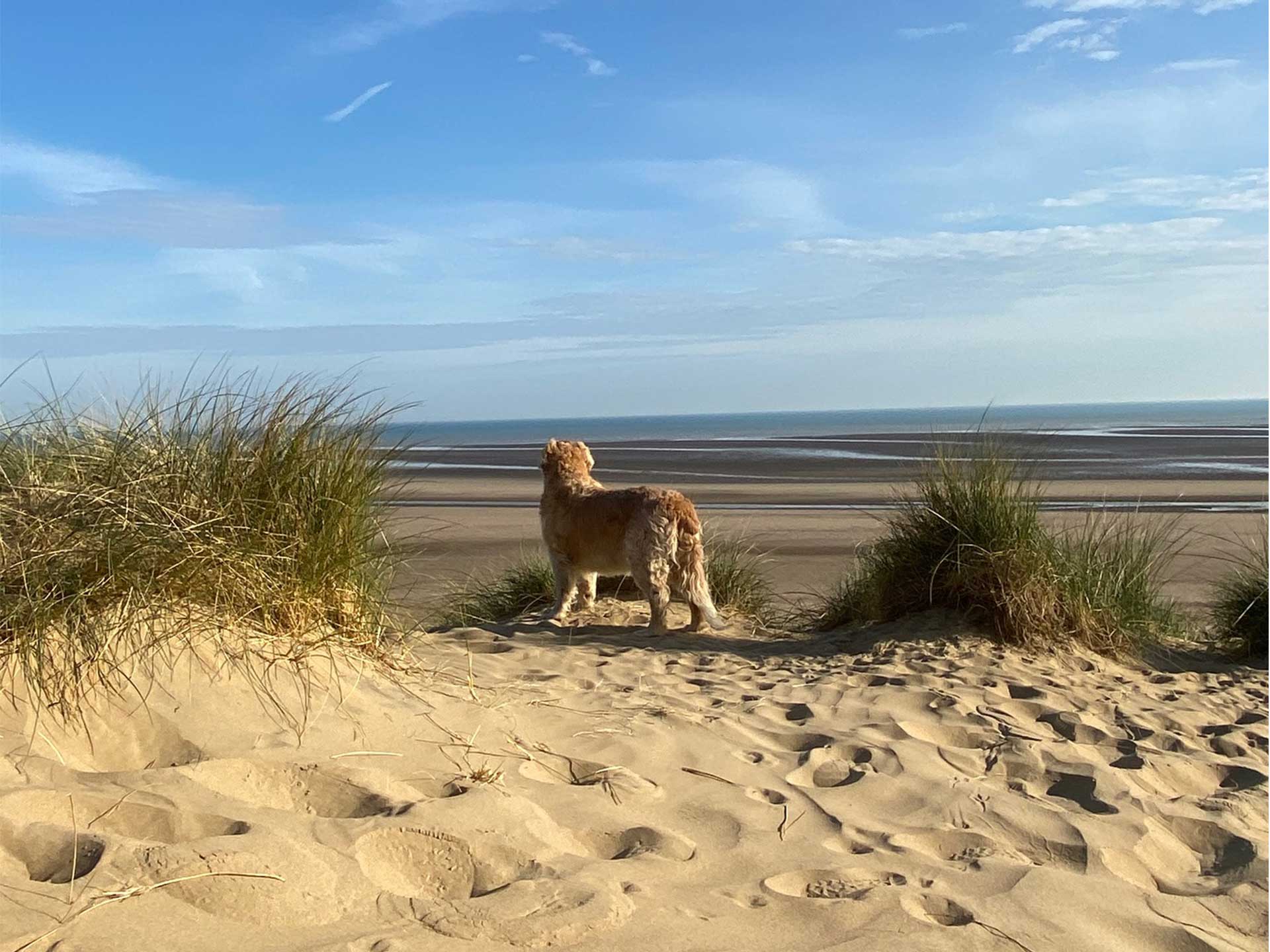
Camber Sands is one of those places that makes dog owners start mentally packing the car before they have finished looking at the photograph.
Miles of sand. Big skies. Dunes. Plenty of room for a proper walk rather than another lap of the park.
The good news is that dogs can enjoy Camber throughout the year. The less convenient bit is that the rules change in summer, and arriving at the wrong beach entrance without knowing that is an avoidable way to start a holiday.
Once you understand the seasonal zones, Camber is straightforward. Better still, outside peak summer it becomes one of our favourite reasons to visit the coast with a dog.
Our favourite time for a dog-friendly Camber break is October through spring. The beach is quieter, the seasonal restrictions ease and a long sandy walk followed by a warm cottage feels like an actual plan rather than a compromise for colder weather.
Are dogs allowed on Camber Sands?
Yes, but there are seasonal restrictions.
Rother District Council currently prohibits dogs from designated zoned areas of Camber Sands between 1 May and 30 September. Outside that period, access is much simpler across the beach.
The important word is ‘zoned’. It is not accurate to say dogs are banned from Camber Sands all summer, and it is equally unhelpful to tell people the beach is simply dog friendly without explaining the restrictions.
Use the official council dog-control map before your trip and read the signs at the beach entrances when you arrive. Beach management can change, and the sign in front of you should always beat an old blog post saved on your phone.
Summer needs a little more planning
Between 1 May and 30 September, the busiest bathing areas are subject to dog restrictions.
If you are staying in Camber, work out the permitted section before setting off rather than walking onto the most convenient part of the beach and hoping for the best. The western end of Camber is commonly used by dog walkers during the restricted period, but the current council map and on-site signs should be treated as the definitive source for the exact boundary.
This matters most on hot days. Sand heats up, water and shade are limited, and the beach can be packed. A dog-friendly holiday does not require your dog to spend six hours on a crowded beach just because you booked a coastal cottage.
Go early, choose the right zone, carry water and know when everyone has had enough.

From October, Camber becomes a different beach
This is the version dog owners tend to fall for.
Once the summer restrictions finish, the beach opens up and the crowds thin. A cold, bright morning can give you a huge amount of sand with very little competition for it.
You will still need to keep your dog under proper control, clean up after them and pay attention to other beach users. Camber also remains a coastal environment with fast tides, wildlife and changing weather.
But the experience is simpler. Walk, stop for coffee, head back to the cottage when the weather turns, then do it again before dinner.
If your idea of a good dog-friendly break involves more walking than itinerary, we would choose autumn, winter or early spring over August.
Low tide gives you more beach, but keep an eye on the water
At low tide Camber can look almost absurdly wide. Dogs love it, and owners tend to relax because there appears to be sand in every direction.
That is exactly when it is worth remembering that Camber has fast incoming tides and sandbars. Rother District Council specifically warns visitors about being cut off by the tide.
You do not need to turn a dog walk into a maritime exercise. Check the tide before setting out, keep a sense of where the main shoreline is and do not let the amount of exposed sand persuade you to stop paying attention.
A long-line can be useful for dogs with selective recall, particularly when the beach is busy or wildlife is nearby.
Treat the dunes as habitat, not an extension of the dog park
The dunes are a large part of what makes Camber special. They are also ecologically important.
The Camber dune system is the only one of its kind in East Sussex and supports a range of plants and animals. Stick to established access routes, follow signs and do not encourage dogs to charge through sensitive vegetation.
This is one of those small choices that makes almost no difference to the quality of your walk and a very real difference when thousands of visitors make it.
The same principle applies when you visit nearby nature reserves. Dog access rules are there because birds and wildlife do not know you have a friendly spaniel.
Rye Harbour is worth doing, but it is not another free-for-all beach walk
Rye Harbour Nature Reserve gives you a completely different landscape from Camber, with shingle, wetlands, saltmarsh and huge skies.
It is a brilliant place to walk, but it is first and foremost a nature reserve. Follow Sussex Wildlife Trust signage and current dog guidance, particularly around sensitive wildlife and nesting areas.
We would give Rye Harbour its own morning rather than tacking it onto the end of an already long Camber walk. Start at the Discovery Centre, understand the route you want to take, then let the landscape do the rest.

For another coastal walk, look towards Winchelsea and Pett Level
If you are staying for several days, it is worth changing the scenery.
Winchelsea Beach and Pett Level give you shingle, sea walls and a quieter coastal feel. They are not interchangeable with Camber, and seasonal dog controls apply to particular areas, so check the current Rother District Council information before setting out.
That is precisely why we like having a few different walks available. Camber is the obvious headline, but a dog-friendly break is better when every morning does not begin at the same beach entrance.
Rye is good for the human half of the dog walk
There comes a point on most coastal holidays when somebody wants lunch that did not come out of a backpack.
Rye is close enough to Camber to make that easy. The town gives you cafés, pubs, independent shops and streets that reward a slow wander rather than a checklist.
Dog policies change by venue, so we would avoid publishing a giant permanent list of ‘dog-friendly’ businesses that becomes wrong six months later. Pick a few places on the day, check their current policy and book ahead if you are travelling at a busy time.
That is more useful than promising that every pub mentioned in a three-year-old article still welcomes wet Labradors beside the fire.
What actually makes a cottage dog friendly?
Allowing a dog through the door is the minimum, not the whole answer.
For a coastal stay, we would look for the practical details: how easy it is to get outside, whether the garden is suitable for your dog, what the flooring is like after a wet walk, how far you are from the beach and whether the property rules fit the number and size of dogs travelling with you.
Do not assume ‘dog friendly’ means every garden is escape-proof for every dog. Read the individual property information and ask if a feature is essential to your stay.
The advantage of staying in Camber itself is simple. A beach walk can happen before breakfast or after the crowds leave without turning into another drive and another parking decision.
What we would pack for a Camber dog break
Nothing revolutionary.
More towels than you think you need. A water bowl for the beach. A lead and long-line if useful. Poo bags in every coat pocket. Something to protect the car from wet sand. Your dog’s usual food rather than assuming the village shop will stock the exact thing they eat at home.
In warmer weather, add plenty of water and think seriously about when you are walking. In winter, the issue flips. Wind, rain and cold can make a short walk plenty, especially for smaller, older or short-coated dogs.
The cottage is part of the holiday. Use it.
Frequently asked questions
Are dogs allowed on Camber Sands all year?
Dogs can visit Camber throughout the year, but designated zoned areas are closed to dogs between 1 May and 30 September. Check the current council map and beach signage for the permitted areas during this period.
When do the summer dog restrictions apply?
Rother District Council currently states that dogs are not permitted in zoned areas between 1 May and 30 September.
Is Camber Sands good for dogs in winter?
Yes. For many dog owners, winter is one of the best times to visit because the beach is quieter and the summer zoned restrictions are no longer in force. Coastal weather can be harsh, so plan walks around conditions.
Can dogs go in the dunes at Camber Sands?
Use established access routes and follow local signage. The dunes are an important habitat, so dogs should not be allowed to damage vegetation or disturb wildlife.
Are there dog-friendly cottages near Camber Sands?
Yes. Camber Holiday Cottages has a dedicated collection of dog-friendly properties. Check each property’s individual rules and features before booking, especially if an enclosed garden or a particular number of dogs is essential.
Stay close enough for the walk to be the easy part
The best dog-friendly Camber breaks are not complicated. A good beach walk, somewhere comfortable to come back to, Rye nearby when you want food and enough flexibility to change the plan when the weather does.
Choose the right cottage and Camber gives you all of that without needing to organise every hour.