

Kitesurfing at Camber Sands: a local guide
On a still summer morning, Camber Sands can look almost too gentle to have much of a watersports reputation. Come back when the wind arrives and the eastern end of the beach tells a different story.
Kites appear over the horizon, boards start cutting across the shallows and the huge expanse of sand suddenly makes sense as a place to learn.
Camber is one of the South East’s established kitesurfing beaches. That does not mean the whole beach is a playground for kites. The watersports area is at the eastern end around Broomhill Sands, away from the busiest family sections of Camber, and there are specific local rules that matter.
If you are new to the sport, our advice is straightforward: book a proper lesson. If you already ride independently, check the tide, wind, local zone and current restrictions before you unpack anything.
This is the practical version of Camber kitesurfing we would give a guest staying locally.
Our view: kitesurfing is one of the best ways to see the wilder side of Camber, but it rewards preparation. This is not an activity to improvise from a YouTube video and a borrowed kite.
Why Camber works so well for kitesurfing
The first thing Camber has in its favour is space.
At lower states of tide, the beach becomes enormously wide. The sandy foreshore and shallow water are part of what has made the area popular for tuition, while the open landscape around Romney Marsh means the coast has a very different feel from a built-up seaside resort.
The second advantage is that there are established schools here. You do not need to arrive knowing the sport or owning equipment. Beginners can learn with qualified instructors, while more experienced riders have a recognised local kitesurfing scene around them.
That combination matters. A good kitesurfing beach is not simply a beach where it happens to be windy.
Head for Broomhill Sands, not the middle of Camber beach
The designated Water Sports Zone is accessed from Broomhill at the eastern end of Camber Sands.
Rother District Council separates kite and watersports activity from the main family beach areas. Broomhill car park gives direct access to this end of the beach, and local signage shows the zones in use.
That distinction is important if you are staying in central Camber. Walking over the nearest dune does not automatically put you in the right place to launch a kite.
Treat the signs on the day as the authority. Beach use, teaching areas and conditions can change, and independent riders need to keep clear of licensed school instruction areas.
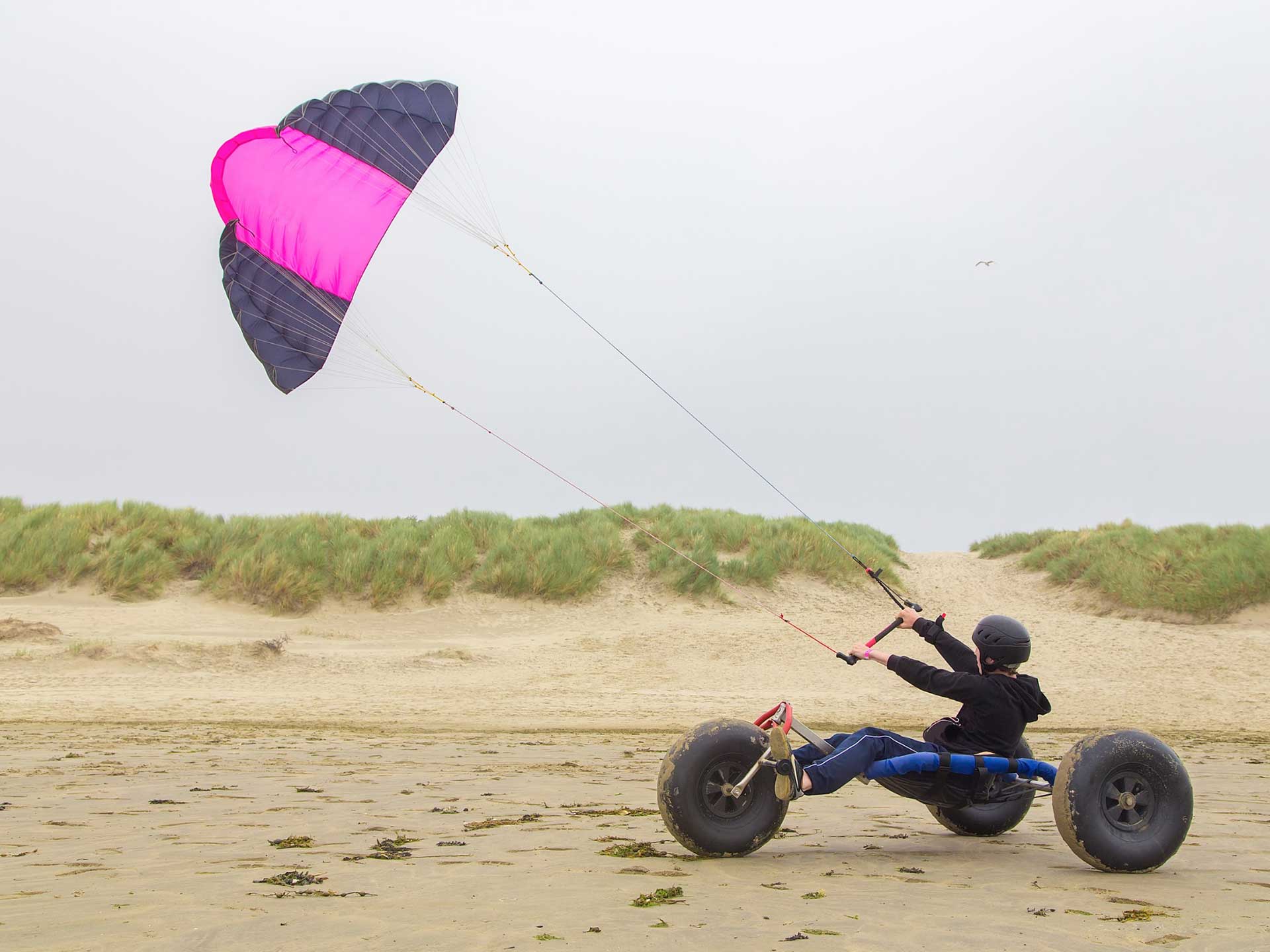
If you have never kitesurfed before, take a lesson
Kitesurfing looks intuitive when somebody good at it is doing it. It is not.
Controlling a powered kite, understanding wind direction, launching safely and managing yourself in the water are skills that need instruction. Camber is fortunate to have established schools operating locally, including The Kitesurf Centre at Broomhill Sands and Camber Kitesurfing on Lydd Road.
The Kitesurf Centre is a BKSA National Training Centre and offers tuition from beginner level upwards. Camber Kitesurfing also operates as a BKSA-approved school close to the teaching zone.
For a visitor, this makes a taster or beginner lesson a much better proposition than trying to build an entire holiday around becoming competent in a weekend. Book the lesson, accept that wind controls the timetable, and leave enough flexibility around it to enjoy the rest of Camber and Rye.
We would also book directly with the school rather than relying on an old activity listing. Lesson schedules, prices, age requirements and weather policies can change.
The tide matters more than your lunch reservation
Camber’s enormous tidal range is part of what makes the beach spectacular, but it also changes the usable space quickly.
Rother District Council advises kitesurfers not to ride for three hours either side of high tide because of local hazards including groynes, rocks, shore break and strong currents. The council also warns about fast incoming tides across Camber generally.
That means the right way to plan a session is around safe conditions, not around a fixed idea that you will kite at 2pm because that is when the itinerary says so.
Check the current tide times. Check the wind. Check the beach signage. If you are taking a lesson, follow the school’s instructions about where and when to meet.
Do not use this page as a live conditions report. Wind, tide and local restrictions need checking on the day.
Wind direction can make Camber the wrong beach
More wind is not automatically better wind.
Rother District Council advises against watersports in offshore winds. Its current local guidance points riders towards Camber in southerly and westerly winds, and towards Greatstone when easterly and northerly winds make Camber offshore. In north-westerly winds, the council advises against using either location.
Experienced riders will already understand why this matters. Beginners do not need to become amateur meteorologists before a first lesson. A reputable school will make the call based on conditions.
The useful lesson for a holiday is simpler: build some flexibility into the day. If the wind does not cooperate, Camber has not failed you. Go for a beach walk, head into Rye, visit Rye Harbour or save the lesson for another suitable window.
What independent riders need to know
If you already kitesurf, Camber still deserves a proper local check before riding.
Current council rules require riders to stay within designated kite zones, hold third-party insurance and keep out of licensed teaching areas. The guidance also identifies hazards including wooden groynes, rocks, two wrecks towards the eastern end, strong currents and the nearby Ministry of Defence training ranges.
If red flags are flying for MOD activity, do not enter the water in the restricted area. Never ride alone, and pay attention to the local launch guidance rather than copying where somebody happened to set up on a previous visit.
This is deliberately not a technical spot guide. Conditions change too quickly for a holiday-cottage website to pretend otherwise. Use the council guidance, current forecasts, tide information and local schools for the decision you make on the day.
Kitesurfing is only one version of an active Camber break
Not everyone in the cottage needs to want a harness and a wetsuit.
That is actually one of Camber’s strengths. One person can book a lesson while the rest of the group walks the beach, heads into Rye or explores the nature reserve. Cycling is another excellent way to understand the landscape, with the route between Camber and Rye giving you a much slower view of the marsh than the car does.
If the wind disappears completely, take the win. Camber is very good at giving you another plan.
Make a weekend of it rather than driving down for one session
Kitesurfing is weather dependent. Staying locally makes that much less frustrating.
Instead of committing to a long drive for a narrow forecast window, you can check the morning conditions, speak to your school, move the lesson if necessary and still have a proper coastal break.
A simple active weekend might look like this:
Friday
Arrive, unpack and walk the beach. Do not worry about squeezing in an activity before dark. Get your bearings and check the next day’s conditions.
Saturday
Take the lesson or session when conditions suit. Head into Rye afterwards for food and an easy evening rather than trying to add another major activity.
Sunday
Use the morning for the beach, a cycle towards Rye or a slower visit to Rye Harbour before heading home.
The point is not to optimise every hour. It is to give the weather enough room to cooperate.
Where to stay for kitesurfing at Camber Sands
If kitesurfing is one reason for the trip, Camber itself is the obvious base.
You stay close to the beach and watersports end while keeping Rye within easy reach for dinner, shopping and a change of scene. A cottage also gives a group more freedom than everyone having to follow the same activity timetable.
When choosing a property, check the individual listing for parking, outside space and any practical features you need for wet kit. Do not assume every cottage has outdoor washing or secure equipment storage.
Frequently asked questions
Can beginners learn to kitesurf at Camber Sands?
Yes. Established local schools offer beginner tuition at Camber. Book qualified instruction rather than attempting to learn independently.
Where is the kitesurfing area at Camber Sands?
The designated Water Sports Zone is around Broomhill Sands at the eastern end of the beach. Follow current Rother District Council signage and local school directions.
Can you kitesurf anywhere on Camber Sands?
No. Kite and watersports activity is zoned to separate it from other beach users. Riders should use the designated area and follow the current local code of conduct.
Is kitesurfing safe at high tide at Camber?
Rother District Council currently advises against kitesurfing for three hours either side of high tide because of local hazards. Always check current conditions and guidance before riding.
Do I need insurance to kitesurf at Camber Sands?
Current council guidance states that riders must hold third-party insurance.
What happens if the wind is wrong for Camber?
Do not force the session. Offshore winds are unsafe. Follow current council guidance or the advice of your instructor and use the day for another local activity.
Stay close enough to wait for the right conditions
The best thing about an active break at Camber is that the beach does not need to perform on command.
Stay locally and you can let the wind decide when you kite, Rye decide where you eat and the beach fill the gaps in between.